

Lean Six Sigma helps engineering design teams reduce rework by identifying waste, measuring design process performance, finding root causes of repeated revisions, standardizing review systems, and improving first-time-right output. The goal is not only faster design delivery. The real goal is better designs, fewer revisions, smoother manufacturing handover, and stronger customer confidence.
In this article, you will learn
- Why engineering rework is a hidden business cost
- How Lean Six Sigma applies to design and engineering teams
- Which engineering wastes slow down design delivery
- How DMAIC helps reduce revisions and approval delays
- How RAAS Consultancy helps improve engineering process performance
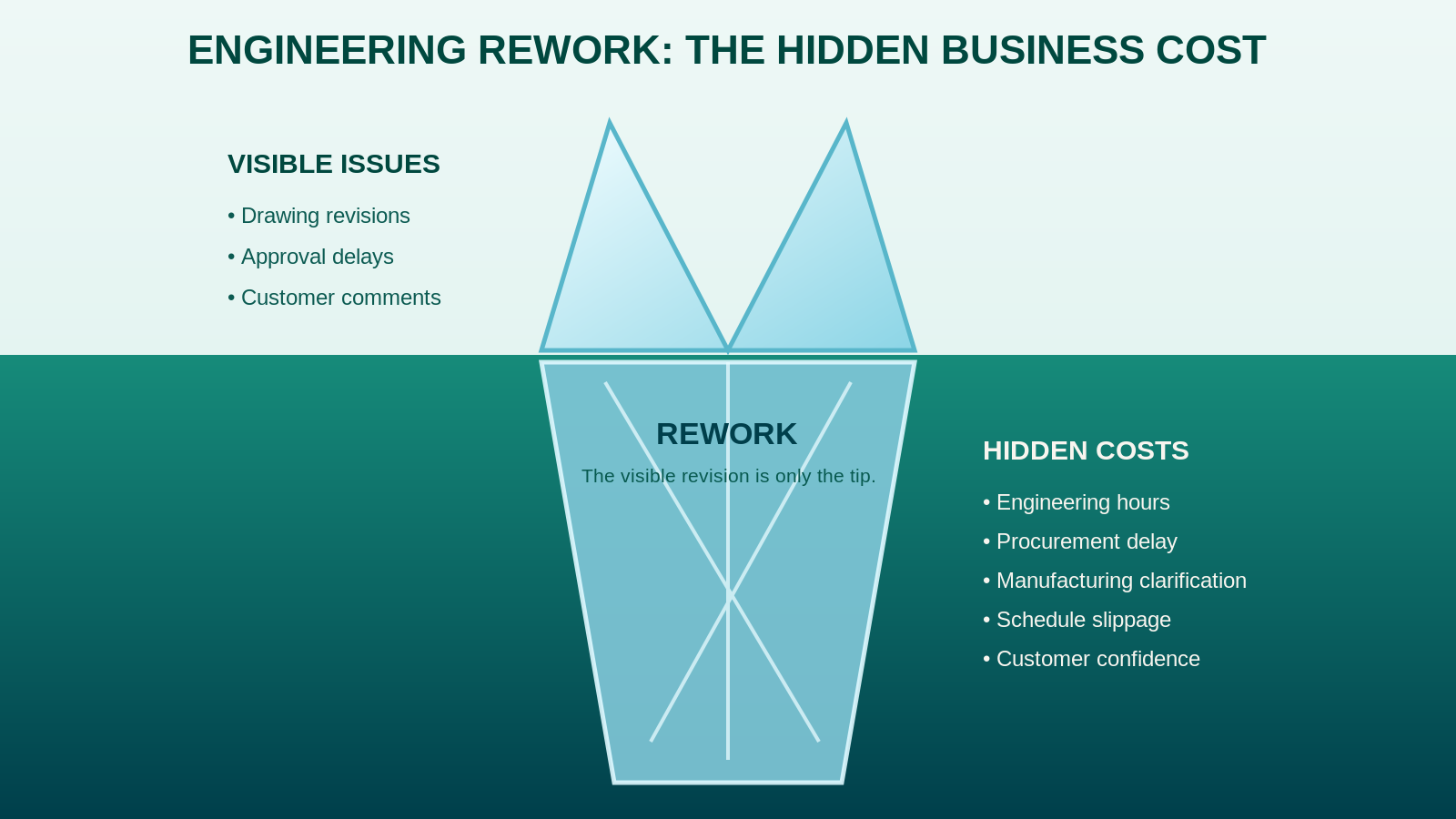
Why Engineering Teams Struggle with Rework
Most engineering organizations already use strong tools: CAD software, simulation tools, PLM systems, document control, digital workflows, and project tracking systems.
Yet problems still continue. Customers ask for another revision. Manufacturing finds an issue during production. Designers wait for inputs. Drawings are released with missing or incorrect details. Project teams conduct repeated review meetings. Engineers spend time correcting work that should have been right the first time.
This is not always a technology problem. Very often, it is a process problem.
When requirements are unclear, review standards are inconsistent, previous knowledge is difficult to access, or approval ownership is weak, even good engineers get trapped in rework.
Lean Six Sigma helps by shifting the discussion from “Who made the mistake?” to “Where did the process fail?”
Looking at Engineering Through a Lean Lens
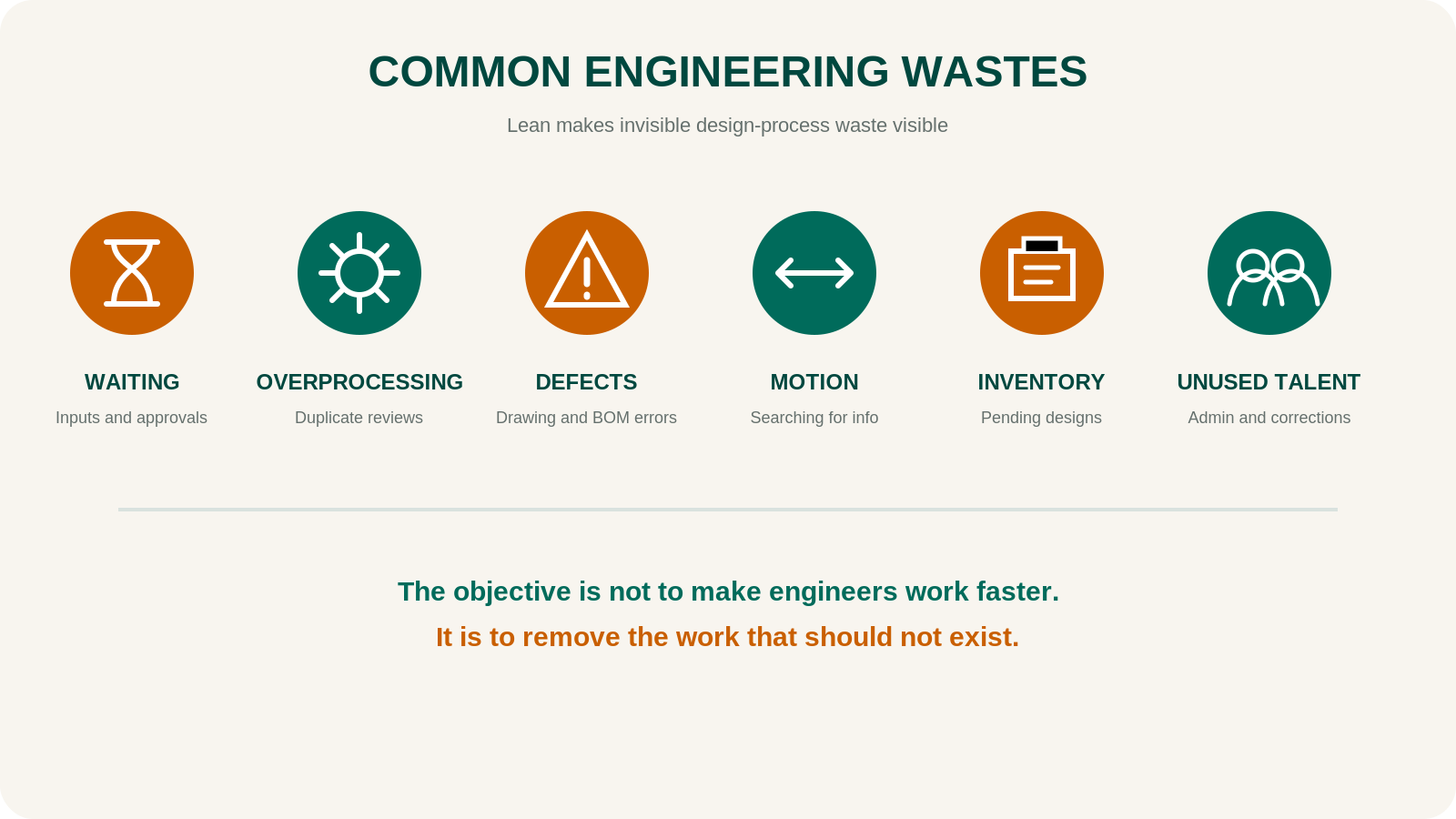
Lean defines waste as any activity that consumes resources without creating customer value. This applies directly to engineering design.
How Lean Six Sigma Improves Engineering Design
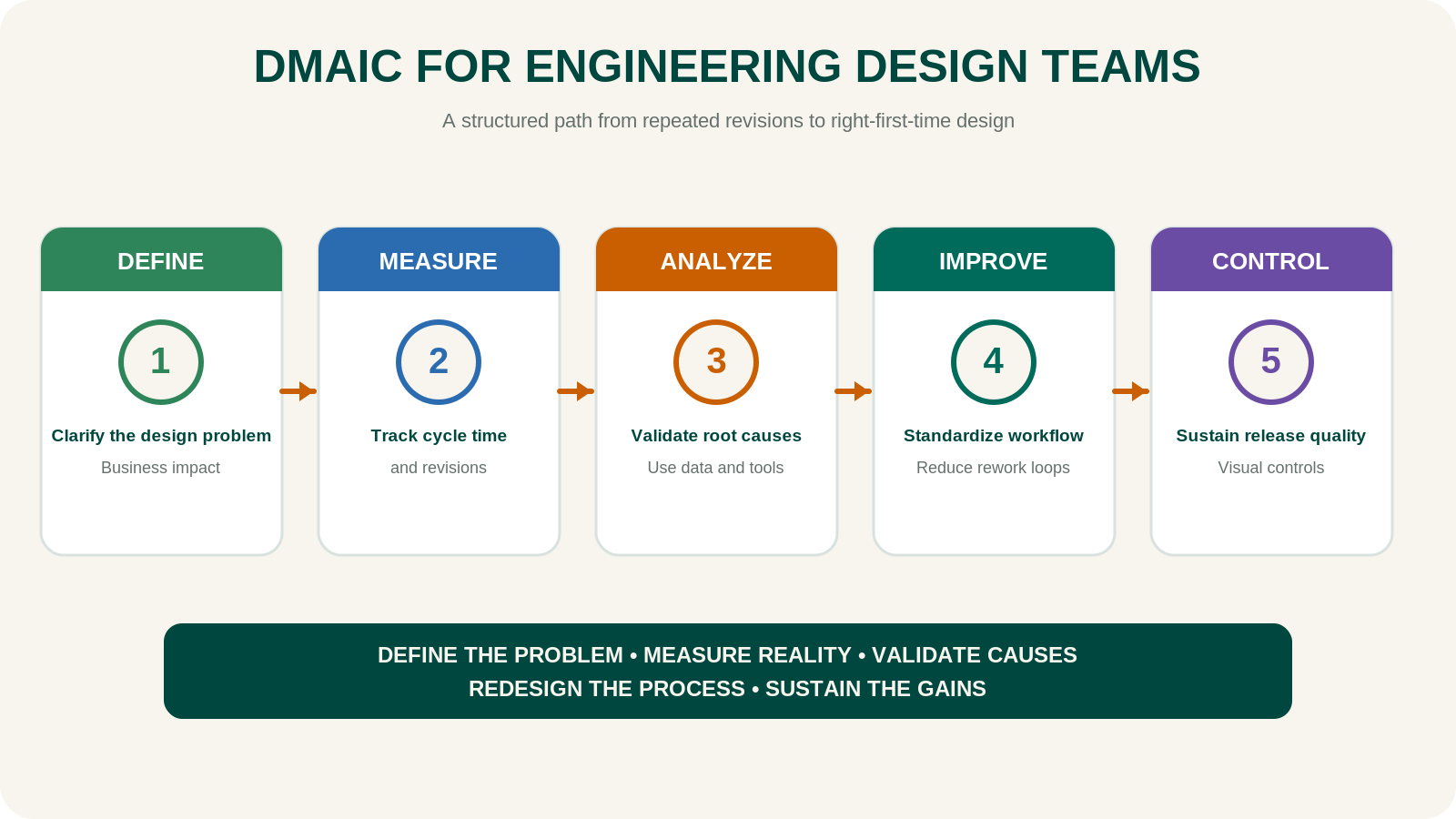
Lean Six Sigma gives engineering teams a structured method to improve the design process. The DMAIC roadmap can be applied very effectively.
Define: Clarify the Business Problem
A weak problem statement sounds like: “Design rework is high.” A stronger statement sounds like: “Design revisions for Product Family A increased from two to six average iterations per project, delaying drawing release by 18 days and affecting procurement and customer delivery.”
The team should define which design process is affected, what type of rework is occurring, which projects or customers are impacted, what business loss is being created, and what improvement target is expected.
Measure: Track the Right Engineering Metrics
Engineering teams cannot improve what they do not measure.
Analyze: Find Root Causes of Rework
Common root causes include incomplete customer requirements, non-standard design methods, inconsistent review criteria, lack of design checklists, poor handover between sales, engineering, manufacturing, and quality, late manufacturability feedback, weak change control, and no clear definition of “ready for release.”
Tools such as Value Stream Mapping, Fishbone Analysis, 5 Why, Pareto Analysis, FMEA, and Process Mapping help engineering teams move from opinion to evidence.
Improve: Build a Better Design Process
Examples include standardized design templates, design review checklists, early customer requirement validation, Design for Manufacturability reviews, modular design libraries, knowledge repositories, clear release criteria, digital workflow automation, revision reason coding, and cross-functional review gates.
The goal is to make good design easier and rework harder.
Control: Sustain the Gains
Engineering dashboards, standard work, design audits, review discipline, workflow tracking, and periodic lessons-learned reviews help sustain improvement.
What prevents this design issue from returning in the next project?
Practical Example: Reducing Drawing Revision Cycles
Imagine an engineering team facing repeated drawing revisions.
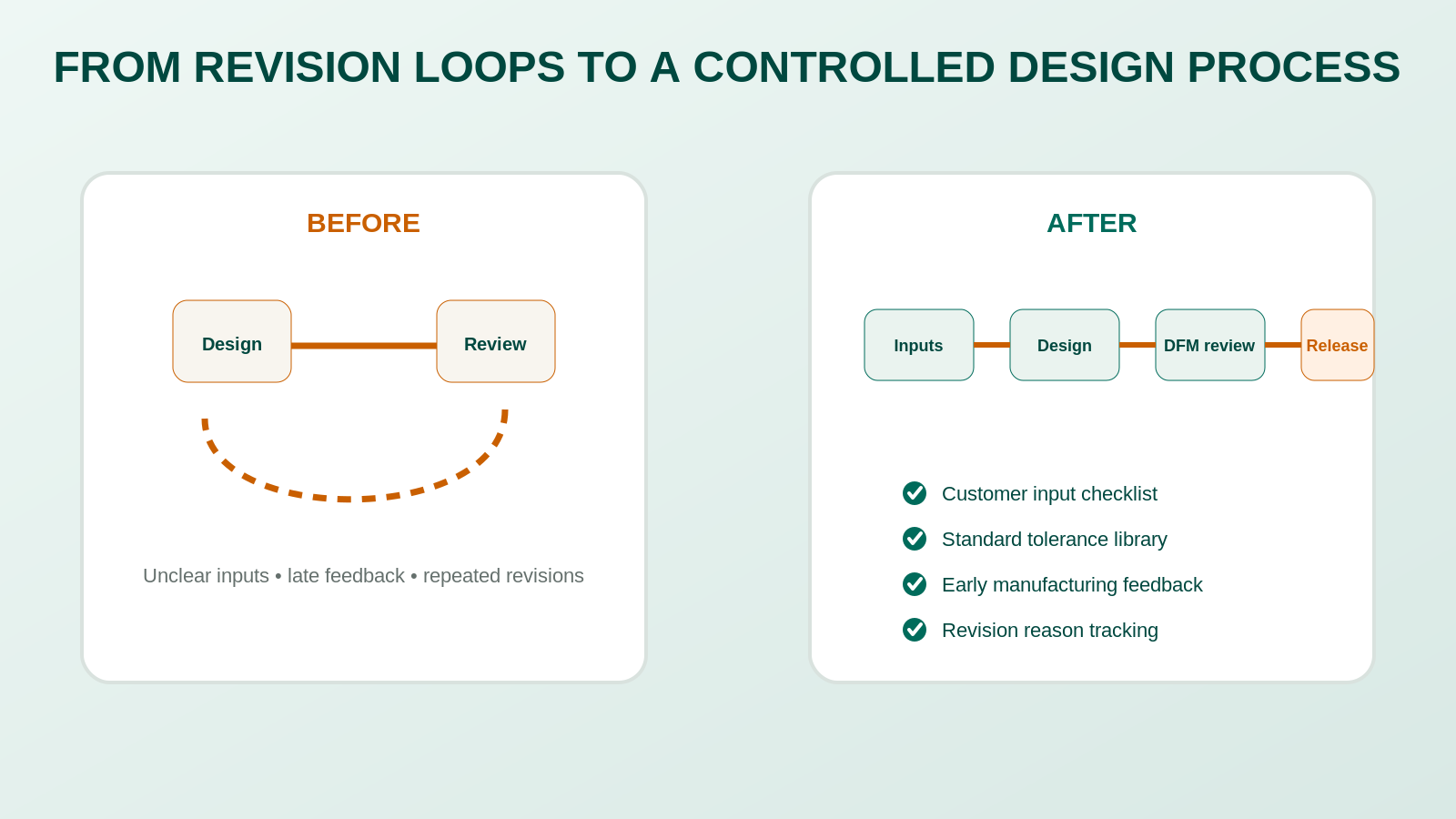
The first response may be to add another review meeting. But Lean Six Sigma may reveal that most revisions come from incomplete customer inputs, unclear tolerance standards, and late manufacturing feedback.
The improvement may include a customer input checklist, standard tolerance library, DFM review before release, and revision reason tracking.
The result is not just fewer revisions. It also means faster approval, reduced engineering overload, smoother procurement, fewer manufacturing interruptions, and better customer experience.
RAAS Point of View
At RAAS Consultancy, engineering improvement is not treated as a documentation exercise. It is treated as a business performance opportunity.
When design rework reduces, the entire value stream improves. Procurement gets clarity earlier. Manufacturing receives better inputs. Quality issues reduce. Project timelines become more predictable. Customers receive faster responses.
RAAS helps organizations improve engineering and operational processes through Lean Six Sigma Projects, Value Stream Mapping, Root Cause Analysis, 7 QC Tools, Kaizen, and Corporate Trainings. The objective is to build internal problem-solving capability, not just complete one improvement project.
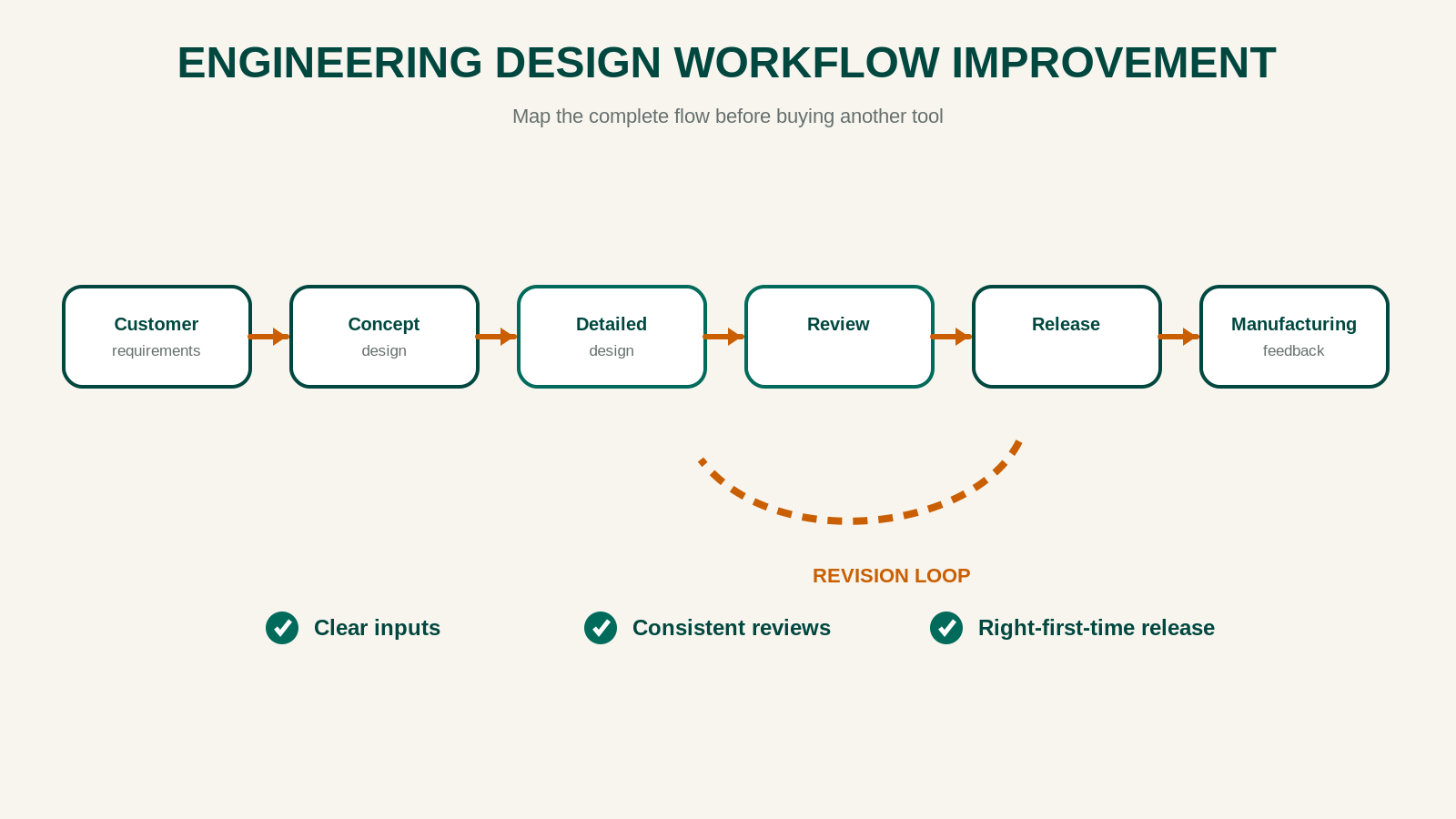
Practical Takeaway: Map the Design Process Before Buying Another Tool
If your engineering team is struggling with rework, missed timelines, or repeated clarifications, do not start by buying another software tool.
Start by mapping the complete design workflow: customer requirement to concept, concept to detailed design, design review to approval, approval to release, release to manufacturing feedback, and customer feedback to future learning.
- Where do most revisions originate?
- Where do engineers spend the most time waiting?
- Which review steps actually improve quality?
- Which information is missing at the start?
- Which design issue has the biggest business impact?
The answers will often show that the biggest opportunity is not more speed. It is better flow, better standards, and better first-time-right quality.
Final Thought
Engineering excellence is not about producing more drawings. It is about producing better designs, faster, with fewer revisions and greater confidence.
Lean Six Sigma gives engineering teams the structure to reduce rework, improve design quality, accelerate cycle time, and create a stronger link between engineering, manufacturing, and customer value.

Asim Inamdar
Founder & Lean Six Sigma Black Belt, RAAS Consultancy. RAAS focuses on practical operational excellence, measurable results, and building internal problem-solving capability.
Frequently Asked Questions
1. Can Lean Six Sigma be used in engineering design?
Yes. Lean Six Sigma can be used in engineering design to reduce rework, shorten cycle time, improve first-time-right quality, standardize reviews, and reduce design-related delays.
2. What causes engineering design rework?
Common causes include unclear customer requirements, inconsistent design standards, poor review systems, missing checklists, late manufacturing feedback, and weak change control.
3. What metrics should engineering teams track?
Useful metrics include design cycle time, revision count, first-pass approval rate, rework hours, drawing release lead time, customer review iterations, and manufacturing clarification requests.
4. How does Lean reduce design cycle time?
Lean reduces design cycle time by removing waiting, duplicate work, unnecessary reviews, unclear handoffs, and delays in information flow.
5. How does Six Sigma improve design quality?
Six Sigma improves design quality by using data-driven root cause analysis to reduce variation, prevent recurring errors, and improve process control.
6. Where should an engineering team start?
Start by mapping the complete design process and identifying where the highest rework, waiting, or revision load is occurring.